

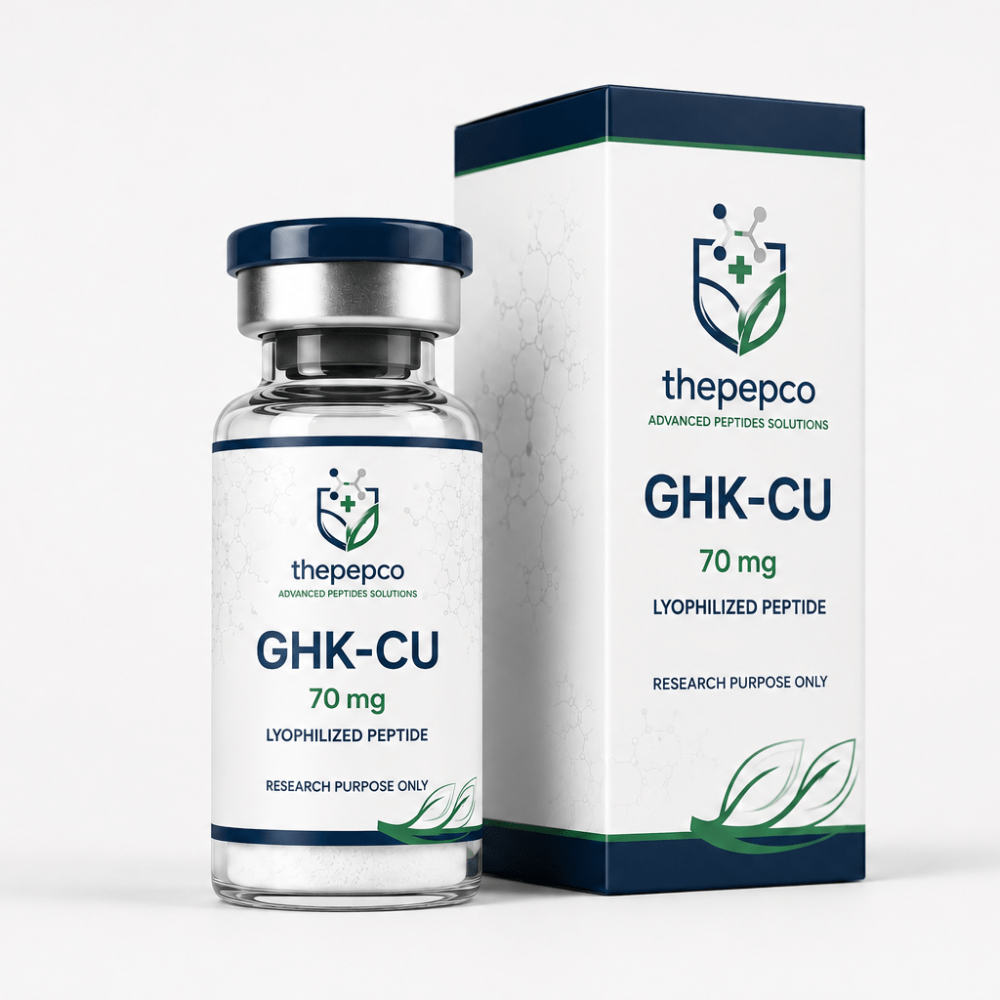
GHK-Cu is a copper-binding tripeptide composed of glycine, histidine and lysine complexed with a copper ion. It has been investigated for its role in cellular signalling, extracellular-matrix regulation and tissue-remodelling processes.
Studied Uses
GHK-Cu has primarily been studied in laboratory and preclinical models involving:
- Collagen production and extracellular-matrix regulation
- Fibroblast activity and cellular repair processes
- Skin and wound-remodelling pathways
- Blood-vessel growth and endothelial signalling
- Oxidative-stress and inflammatory responses
Laboratory studies have reported that GHK-Cu can stimulate collagen synthesis in cultured fibroblasts. Other research has examined its effects on fibroblast growth and the production of signalling factors associated with blood-vessel formation and cellular repair.
How It Works
GHK has a strong affinity for copper and forms the GHK-Cu complex by binding a copper ion. This complex is thought to help regulate the availability of copper for biological processes involved in enzyme activity, cellular signalling and tissue maintenance.
In cultured fibroblasts, GHK-Cu has been associated with increased collagen synthesis and changes in matrix metalloproteinase-2 activity. Matrix metalloproteinases participate in breaking down and reorganizing components of the extracellular matrix, making both collagen production and controlled matrix degradation important parts of tissue remodelling.
The available evidence is largely based on cellular, topical and animal research, and findings from these models should not automatically be interpreted as established effects from every formulation or method of administration.
Product Details
Product: GHK-Cu
Strength: 70 mg
Form: Lyophilized powder
Presentation: Single vial
Reviews
There are no reviews yet.